

Opinion piece from Calp – 'Los lunes negros' column
Neighbour. Working in Calp is becoming a high-risk activity.
Or how the summer that fills the streets can also empty the tills of those who pay to open their doors.
Neighbour,
in Calp there are people who begin summer before the town appears in the photograph.
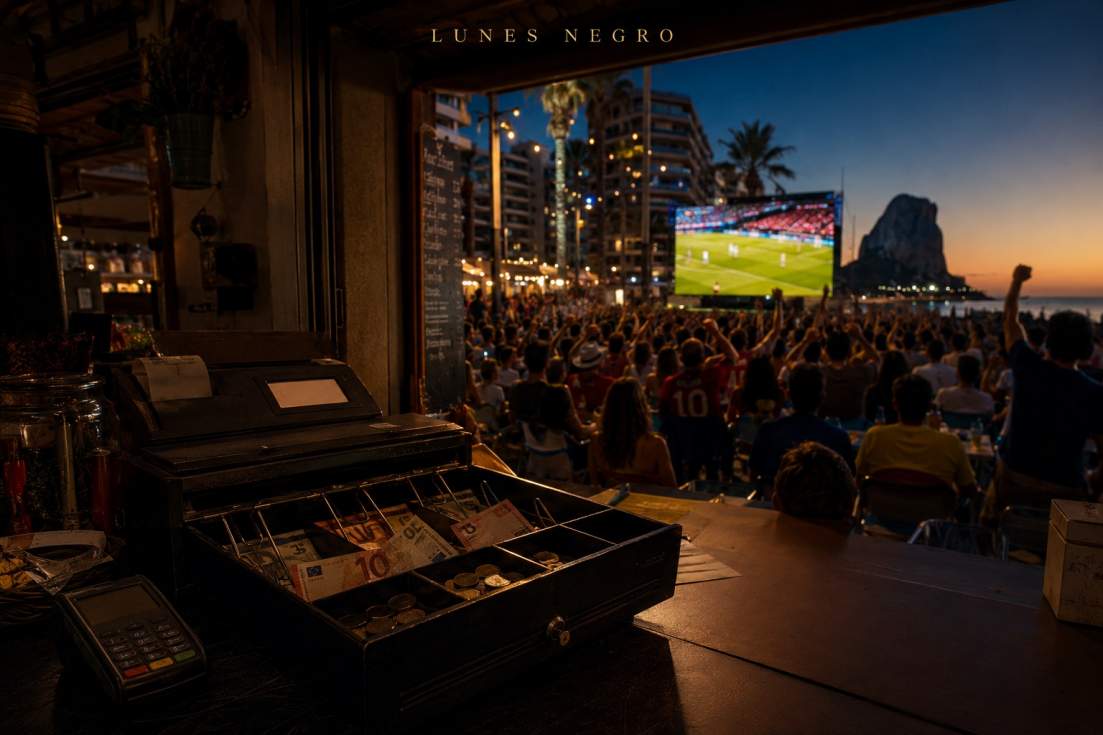
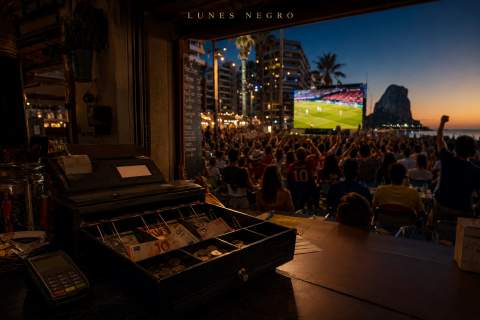
They raise the shutter, turn on the light, set the tables, check the cold room, look at the till, pay the licence, pay the rent, pay the waste tax, pay wages and hope that summer walks through the door.
But opening a business in Calp is no longer just opening.
It is taking on risk.
Risk of paying all year round so that, when summer arrives, the street fills with events, screens, authorised temporary bars, campaigns, exceptions and activities that are not always playing by the same rules.
Because for some, summer is atmosphere.
For others, before it is atmosphere, it is takings.
And when the till trembles, the atmosphere no longer sounds the same.
This is not about being against summer.
A town without celebration would be a sadder town.
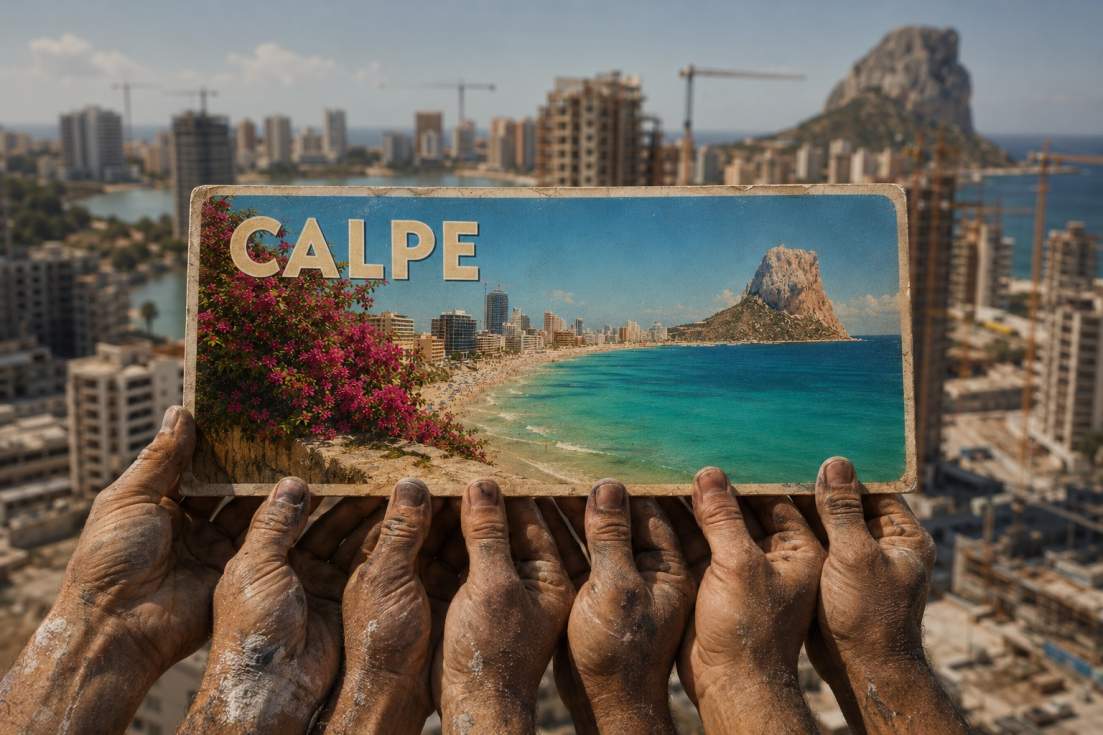
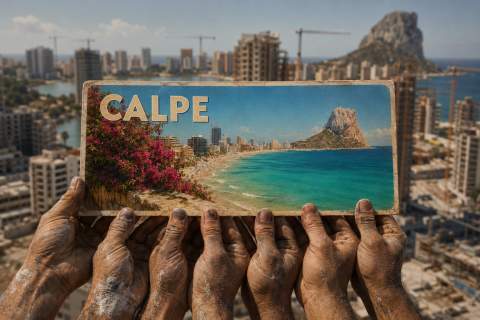
A beach without people would be a dead postcard.
A town without associations, without culture, without sport and without shared nights would be less of a town.
But precisely for that reason, summer needs clean rules.
Because when public celebration is organised badly, the private cost does not disappear.
It simply moves into someone else’s pocket.
And a serious town cannot hide behind a giant screen all the questions it does not know how to answer.
This week Calp did not only have summer.
It placed it in the middle of the beach, gave it a screen, a poster, a flag, a timetable, a photograph and a narrative.
It called it atmosphere.
It called it programming.
It called it celebration.
It called it a living town.
Giant screen.
Tapas Festival.
Football.
Events.
Posts.
Photographs.
Everything seemed ready to say the same thing: there is summer, there are people, there is a town.
And that, in principle, should not be a problem.
The problem begins when power organises where people look.
Because when it organises where people look, it also organises where the money moves.
And that is where the uncomfortable question begins.
That is where summer stops being a postcard and starts showing up on the bottom line.
Because the local business owner does not live on photographs.
He lives on takings.
And the till does not understand speeches.
It understands customers who walk in or do not walk in.
Tables that fill or empty.
People who spend in one place or another.
Events that move footfall.
Authorised temporary bars.
Public screens.
Activities in the street.
Competition that does not always carry the same costs.
Local business is not asking Calp to stop living.
It is asking that living in Calp should not mean always competing uphill.
It is asking that celebration should not be organised while forgetting those who pay for the street when there is no celebration.
Because a town that wants open businesses cannot treat local business as a backdrop.
Calp calls it atmosphere.
Some businesses are beginning to call it imbalance.
Because in Calp there is a rule almost no one dares to say out loud.
Summer does not cost the same for everyone.
For some, it is a poster.
For others, a bill.
For some, it is a screen.
For others, rent.
For some, it is an authorised temporary bar.
For others, licence, terrace, waste tax, wages, electricity, insurance, inspections and a till that has to balance even if consumption moves somewhere else.
That is not just atmosphere.
That is an uneven playing field.
And when the field is uneven, local business does not compete.
It survives.
Because beneath every summer poster, the same town always appears.
The one asking about the foot showers.
The one complaining about the rubbish.
The one that cannot find parking.
The one that lives in a residential estate where promises arrive less often than photographs.
The one that watches a screen, a party or an operation being set up, while the basics are still waiting their turn.
That resident is not against summer.
He is tired of summer being used to light up the stage while leaving everything else in shadow.
And perhaps that is the clearest sign of the week: Calp does not lack a narrative.
It lacks balance between what it shows and what it listens to.
Neighbour,
cities are not sustained by posters.
They are sustained by people.
By those who open.
By those who pay.
By those who employ.
By those who endure when the season ends and the lights go out.
If they begin to feel that working is a high-risk activity, then the postcard will remain beautiful.
But each year it will have fewer hands capable of holding it up.
Once read,
it cannot be unread.
AVE CALPINVS.

Francisco Ramón Perona García (@fran_rpg)
Jurist. Citizen. Uncomfortable.

Neighbour,
in Calp there are people who begin summer before the town appears in the photograph.
They raise the shutter, turn on the light, set the tables, check the cold room, look at the till, pay the licence, pay the rent, pay the waste tax, pay wages and hope that summer walks through the door.
But opening a business in Calp is no longer just opening.
It is taking on risk.
Risk of paying all year round so that, when summer arrives, the street fills with events, screens, authorised temporary bars, campaigns, exceptions and activities that are not always playing by the same rules.
Because for some, summer is atmosphere.
For others, before it is atmosphere, it is takings.
And when the till trembles, the atmosphere no longer sounds the same.
This is not about being against summer.
A town without celebration would be a sadder town.
A beach without people would be a dead postcard.
A town without associations, without culture, without sport and without shared nights would be less of a town.
But precisely for that reason, summer needs clean rules.
Because when public celebration is organised badly, the private cost does not disappear.
It simply moves into someone else’s pocket.
And a serious town cannot hide behind a giant screen all the questions it does not know how to answer.
This week Calp did not only have summer.
It placed it in the middle of the beach, gave it a screen, a poster, a flag, a timetable, a photograph and a narrative.
It called it atmosphere.
It called it programming.
It called it celebration.
It called it a living town.
Giant screen.
Tapas Festival.
Football.
Events.
Posts.
Photographs.
Everything seemed ready to say the same thing: there is summer, there are people, there is a town.
And that, in principle, should not be a problem.
The problem begins when power organises where people look.
Because when it organises where people look, it also organises where the money moves.
And that is where the uncomfortable question begins.
That is where summer stops being a postcard and starts showing up on the bottom line.
Because the local business owner does not live on photographs.
He lives on takings.
And the till does not understand speeches.
It understands customers who walk in or do not walk in.
Tables that fill or empty.
People who spend in one place or another.
Events that move footfall.
Authorised temporary bars.
Public screens.
Activities in the street.
Competition that does not always carry the same costs.
Local business is not asking Calp to stop living.
It is asking that living in Calp should not mean always competing uphill.
It is asking that celebration should not be organised while forgetting those who pay for the street when there is no celebration.
Because a town that wants open businesses cannot treat local business as a backdrop.
Calp calls it atmosphere.
Some businesses are beginning to call it imbalance.
Because in Calp there is a rule almost no one dares to say out loud.
Summer does not cost the same for everyone.
For some, it is a poster.
For others, a bill.
For some, it is a screen.
For others, rent.
For some, it is an authorised temporary bar.
For others, licence, terrace, waste tax, wages, electricity, insurance, inspections and a till that has to balance even if consumption moves somewhere else.
That is not just atmosphere.
That is an uneven playing field.
And when the field is uneven, local business does not compete.
It survives.
Because beneath every summer poster, the same town always appears.
The one asking about the foot showers.
The one complaining about the rubbish.
The one that cannot find parking.
The one that lives in a residential estate where promises arrive less often than photographs.
The one that watches a screen, a party or an operation being set up, while the basics are still waiting their turn.
That resident is not against summer.
He is tired of summer being used to light up the stage while leaving everything else in shadow.
And perhaps that is the clearest sign of the week: Calp does not lack a narrative.
It lacks balance between what it shows and what it listens to.
Neighbour,
cities are not sustained by posters.
They are sustained by people.
By those who open.
By those who pay.
By those who employ.
By those who endure when the season ends and the lights go out.
If they begin to feel that working is a high-risk activity, then the postcard will remain beautiful.
But each year it will have fewer hands capable of holding it up.
Once read,
it cannot be unread.
AVE CALPINVS.
Francisco Ramón Perona García (@fran_rpg)
Jurist. Citizen. Uncomfortable.















Normas de participación
Esta es la opinión de los lectores, no la de este medio.
Nos reservamos el derecho a eliminar los comentarios inapropiados.
La participación implica que ha leído y acepta las Normas de Participación y Política de Privacidad
Normas de Participación
Política de privacidad
Por seguridad guardamos tu IP
216.73.217.16