


Opinion piece from Calp – 'Los lunes negros' column
Neighbour. When the numbers run out, the truth begins.
Or how a single vote reminded those in power that having the numbers is not the same as having convinced anyone.
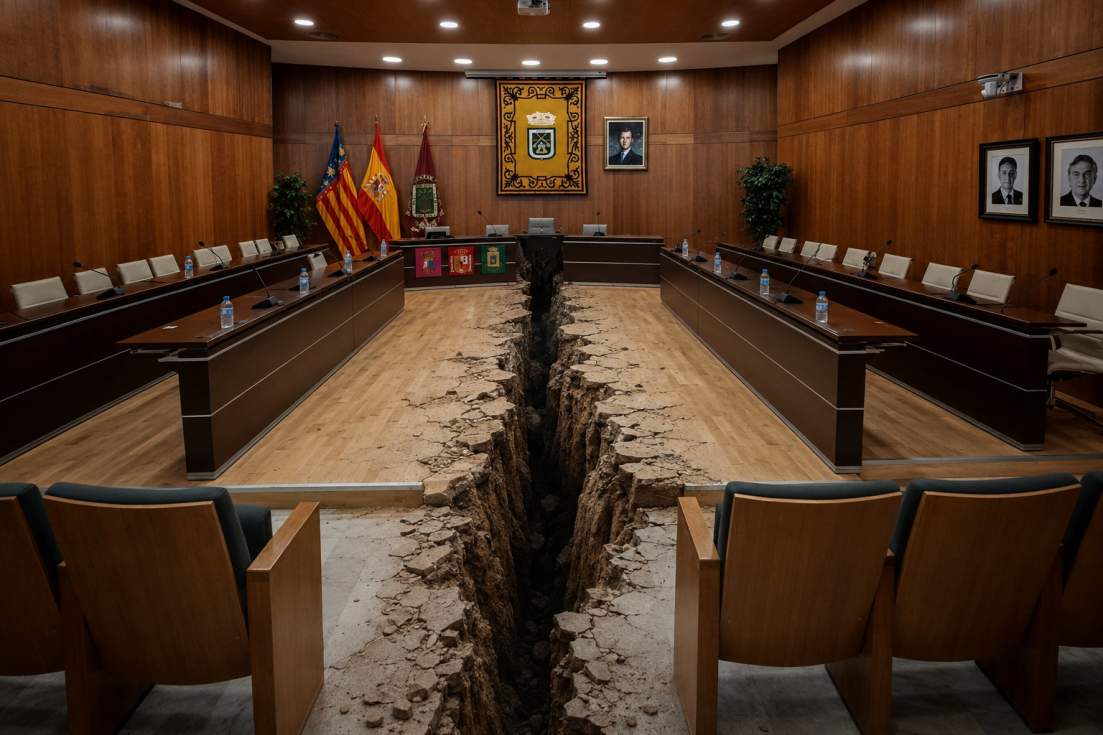
Neighbour,
power rarely reveals itself when it wins.
When it wins, it smiles. When it wins, it hands out photographs.
When it wins, it calls its own comfort stability.
Power reveals itself when it loses.
There is no need for a resignation. No need for a court ruling. No need for a great scene of rupture.
Sometimes a vote is enough.
One single vote.
This week, in Calp, no government fell.
But a habit cracked.
The habit of confusing votes with reason.
And when the numbers run out, the truth begins.
The specific vote was almost beside the point.
What was truly uncomfortable was something else: those in power discovered that they could no longer walk into the council chamber with the result already in their pocket.
For years, too many debates ended before they began.
There was discussion, yes. There was speaking, yes. Conflict was staged too. But the outcome had already been decided before the first person was heard.
That is not dialogue.
It is the habit of ruling by command.
This week, for the first time, the council meeting stopped being a rubber stamp.
And that hurts more than a defeat.
Because a defeat can be explained.
A loss of control reveals itself.
Every majority has a temptation.
To believe that the number does not only allow it to govern, but also allows it to stop listening.
At first, the majority looks like a mandate. Then it looks like stability. Later, if no one controls it, it begins to look like a natural right.
And that is where the deterioration begins.
Because one thing is to have the votes to approve. Something very different is to believe that those votes make every explanation unnecessary, every criticism noise and every limit an aggression.
That is what began to crack this week.
Not a legislature. Not a mayoralty. Not an institution.
Something more silent broke: the feeling that those in power could walk into the council chamber with the answer already written in their pocket.
And that is why it hurt.
Because they did not only lose a vote.
They lost a habit.
And whoever gets used to winning without persuading, when he loses, no longer knows whether to negotiate or get angry.
Then came the usual word.
The word “obstruction” is convenient.
It serves to avoid explaining.
It serves to avoid negotiating.
It serves to turn any limit into a threat and any disagreement into an attack.
When power wins, it calls it stability.
When power loses, it calls it obstruction.
But the council does not exist to obey the government.
It exists to test it.
And if a majority only works when no one contradicts it, perhaps the problem is not with those who no longer vote as expected.
Perhaps the problem was with those who had grown used to governing without persuading.
Dialogue is a beautiful word.
That is why it is worth distrusting it when power pronounces it late.
For years, when the numbers were enough, dialogue could be decoration. A kind word. An institutional courtesy. A phrase used to close speeches.
But when the numbers are no longer enough, dialogue stops being an ornament.
It becomes an obligation.
That is where you see who knows how to govern and who only knew how to add up.
Whoever knew how to talk, negotiates. Whoever only knew how to command, gets angry. Whoever confused majority with ownership calls it obstruction when others begin to count too.
And whoever had grown used to winning without persuading suddenly discovers that democracy was not the result.
It was the path.
This week, Calp did not only see a vote.
It saw a question.
If those in power can no longer impose as before, will they know how to speak as they never wanted to?
And meanwhile, the resident watches.
He watches the council meeting.
He watches the accusations.
He watches the statements.
He watches how a vote becomes a fight over the story.
But the resident does not live on majorities.
He lives on answers.
He lives on knowing how much he pays, why he pays it and who explains the bill. He lives on services that work, on understandable files, on explained bills, on streets that are not abandoned and on decisions that do not arrive wrapped in propaganda.
He lives on a simple question:
if no one can now impose alone, will anyone begin to explain better?
Neighbour,
nothing collapsed.
Only a habit broke.
The habit of believing that governing meant counting before listening.
The habit of calling a comfortable majority stability.
The habit of calling any limit obstruction.
This week, power did not lose the Town Hall.
It lost something harder to recover:
the feeling that adding up would always be enough.
And when adding up is no longer enough, neighbour, the truth begins.
Once read,
it cannot be unread.
AVE CALPINVS.

Francisco Ramón Perona García (@fran_rpg)
Jurist. Citizen. Uncomfortable.

Neighbour,
power rarely reveals itself when it wins.
When it wins, it smiles. When it wins, it hands out photographs.
When it wins, it calls its own comfort stability.
Power reveals itself when it loses.
There is no need for a resignation. No need for a court ruling. No need for a great scene of rupture.
Sometimes a vote is enough.
One single vote.
This week, in Calp, no government fell.
But a habit cracked.
The habit of confusing votes with reason.
And when the numbers run out, the truth begins.
The specific vote was almost beside the point.
What was truly uncomfortable was something else: those in power discovered that they could no longer walk into the council chamber with the result already in their pocket.
For years, too many debates ended before they began.
There was discussion, yes. There was speaking, yes. Conflict was staged too. But the outcome had already been decided before the first person was heard.
That is not dialogue.
It is the habit of ruling by command.
This week, for the first time, the council meeting stopped being a rubber stamp.
And that hurts more than a defeat.
Because a defeat can be explained.
A loss of control reveals itself.
Every majority has a temptation.
To believe that the number does not only allow it to govern, but also allows it to stop listening.
At first, the majority looks like a mandate. Then it looks like stability. Later, if no one controls it, it begins to look like a natural right.
And that is where the deterioration begins.
Because one thing is to have the votes to approve. Something very different is to believe that those votes make every explanation unnecessary, every criticism noise and every limit an aggression.
That is what began to crack this week.
Not a legislature. Not a mayoralty. Not an institution.
Something more silent broke: the feeling that those in power could walk into the council chamber with the answer already written in their pocket.
And that is why it hurt.
Because they did not only lose a vote.
They lost a habit.
And whoever gets used to winning without persuading, when he loses, no longer knows whether to negotiate or get angry.
Then came the usual word.
The word “obstruction” is convenient.
It serves to avoid explaining.
It serves to avoid negotiating.
It serves to turn any limit into a threat and any disagreement into an attack.
When power wins, it calls it stability.
When power loses, it calls it obstruction.
But the council does not exist to obey the government.
It exists to test it.
And if a majority only works when no one contradicts it, perhaps the problem is not with those who no longer vote as expected.
Perhaps the problem was with those who had grown used to governing without persuading.
Dialogue is a beautiful word.
That is why it is worth distrusting it when power pronounces it late.
For years, when the numbers were enough, dialogue could be decoration. A kind word. An institutional courtesy. A phrase used to close speeches.
But when the numbers are no longer enough, dialogue stops being an ornament.
It becomes an obligation.
That is where you see who knows how to govern and who only knew how to add up.
Whoever knew how to talk, negotiates. Whoever only knew how to command, gets angry. Whoever confused majority with ownership calls it obstruction when others begin to count too.
And whoever had grown used to winning without persuading suddenly discovers that democracy was not the result.
It was the path.
This week, Calp did not only see a vote.
It saw a question.
If those in power can no longer impose as before, will they know how to speak as they never wanted to?
And meanwhile, the resident watches.
He watches the council meeting.
He watches the accusations.
He watches the statements.
He watches how a vote becomes a fight over the story.
But the resident does not live on majorities.
He lives on answers.
He lives on knowing how much he pays, why he pays it and who explains the bill. He lives on services that work, on understandable files, on explained bills, on streets that are not abandoned and on decisions that do not arrive wrapped in propaganda.
He lives on a simple question:
if no one can now impose alone, will anyone begin to explain better?
Neighbour,
nothing collapsed.
Only a habit broke.
The habit of believing that governing meant counting before listening.
The habit of calling a comfortable majority stability.
The habit of calling any limit obstruction.
This week, power did not lose the Town Hall.
It lost something harder to recover:
the feeling that adding up would always be enough.
And when adding up is no longer enough, neighbour, the truth begins.
Once read,
it cannot be unread.
AVE CALPINVS.
Francisco Ramón Perona García (@fran_rpg)
Jurist. Citizen. Uncomfortable.


















Normas de participación
Esta es la opinión de los lectores, no la de este medio.
Nos reservamos el derecho a eliminar los comentarios inapropiados.
La participación implica que ha leído y acepta las Normas de Participación y Política de Privacidad
Normas de Participación
Política de privacidad
Por seguridad guardamos tu IP
216.73.217.59