

Opinion piece from Calp – 'Los lunes negros' column
Neighbour. Don’t mistake a patch for a project.
Or how power fills the public showcase while residents keep paying for wounds no one dared to close.
Neighbour,
There are weeks when Calp does not explode.
There is no major resignation.
No heated council meeting.
No sentence running through the town before lunchtime.
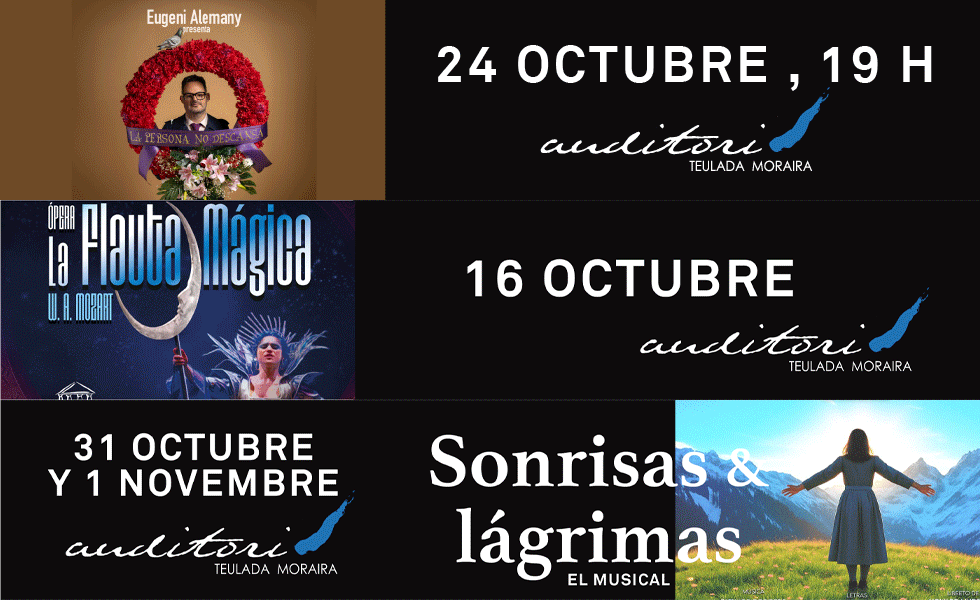
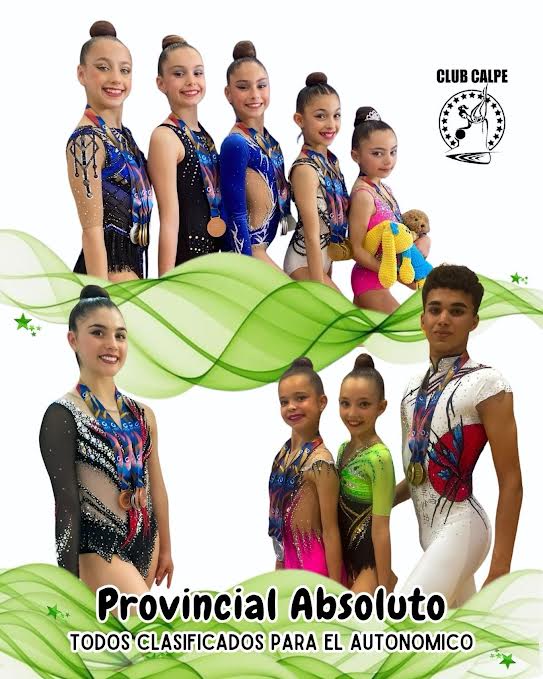
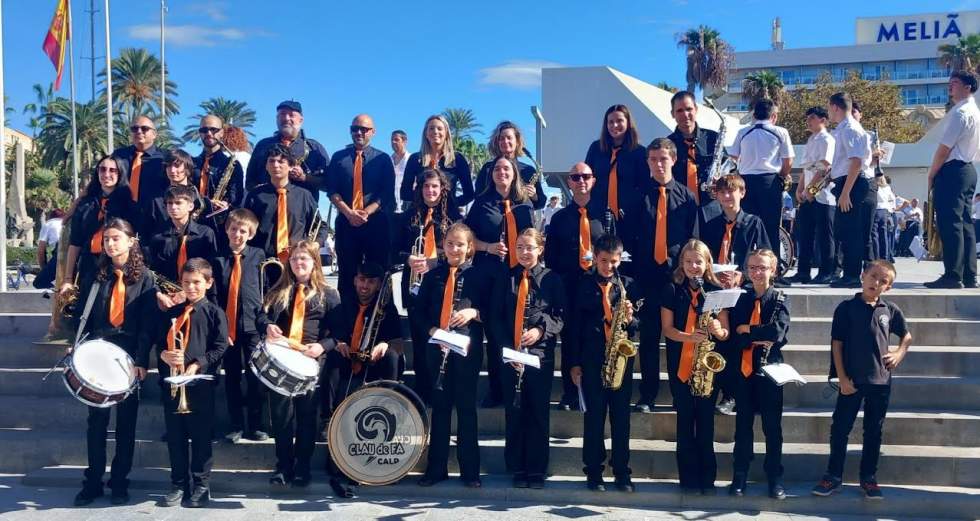
There are only posters.
Posters about grants.
Posters about campaigns.
Posters about activities.
Posters about commerce.
Posters about youth.
Posters about culture.
Posters of a town that seems to be constantly moving, yet is becoming harder and harder to recognise as a project.
And perhaps that is precisely where the real story lies.
Not in what happened this week.
But in the way they tried to make it look as though everything was still working.
Because when the public showcase becomes too crowded, it no longer always displays strength.
Sometimes it begins to reveal fear.
Let no one be mistaken.
The problem is not that aid is announced.
Aid may be necessary.
It may provide relief.
It may reach a family, a young person, a student or a small business that can no longer manage alone.
But aid can also say more than it appears to say.
It can say that something arrived late.
That something was allowed to grow for too long.
That someone is now carrying a burden they should never have had to carry.
That the town now needs to compensate, through small doses of relief, for what it failed to organise when there was still time.
That is why the problem begins when aid stops looking like a one-off measure and starts looking like a way of managing a town that cannot solve its underlying problems.
Because helping residents is one thing.
Getting them used to surviving on patches is something very different.
That is the difference.
We are not talking about one specific grant.
We are talking about a method.
A method that arrives late, announces relief, and avoids asking the only question that matters: why are there more and more wounds to soothe?
This week, it did not take much noise to see it.
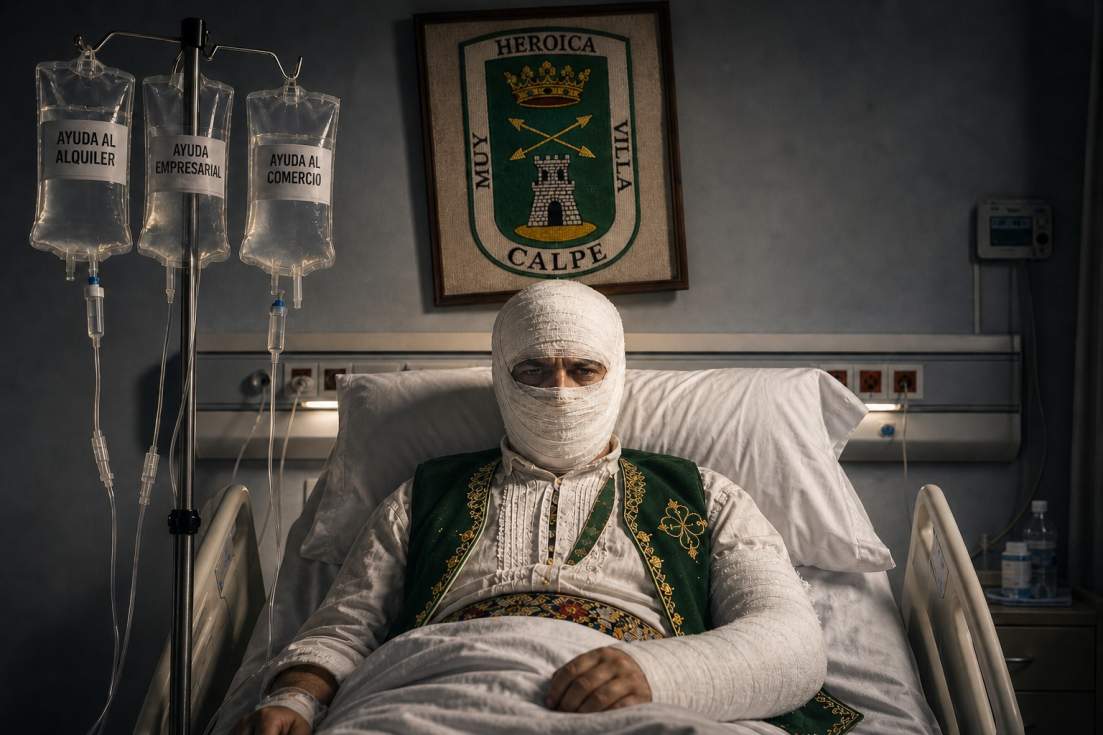
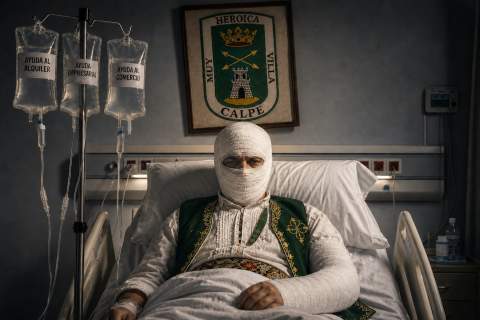
The Town Council published grants, campaigns, announcements and posters as if placing bandages over a town that is still bleeding.
Aid for rent, because living in Calp is becoming increasingly difficult.
Aid for transport, because studying or working outside the town also weighs heavily.
Aid for businesses, because the local economy needs to breathe.
A campaign for local commerce, because local shops can no longer survive on kind words alone.
And post after post, as if the accumulation of announcements could be mistaken for direction.
But a town is not repaired by piling up bandages.
And when a new form of aid appears every week, perhaps the right question is no longer how much it relieves, but what illness it is trying to conceal.
That is the most comfortable way to govern when those in power have already arrived too late.
First, the problem is allowed to grow.
Then the aid is announced.
Then the poster is made.
And finally, relief is sold as if it were a project.
But that is not governing.
That is administering the consequences of neglect.
Because when a town needs help to rent, help to move, help to sustain commerce, help for businesses to breathe and help for residents not to give up, power should feel embarrassment, not pride.
Aid may be necessary.
But it cannot become a medal.
Because a bandage is not a victory.
It is proof of a wound.
The paradox lies precisely there.
Each poster wants to say:
“we are helping”.
But it also says something else:
“this no longer stands on its own”.
Aid for rent says that housing has become impossible.
Aid for transport says that studying or working outside the town weighs too heavily.
Aid for local commerce says that small businesses need oxygen.
Aid for companies says that the local economy is carrying wounds.
One campaign after another says that the town needs to be pushed so it does not stop.
And then the public showcase changes meaning.
It no longer looks like a display of achievements.
It begins to look like a medical report.
And meanwhile, the resident remains there.
Not on the poster.
Not in the photograph.
Not in the institutional slogan.
Still in real life.
In the rent that does not fall.
In the salary that is not enough.
In the shop that opens every morning without knowing whether the numbers will add up by the end of the month.
In the student who needs help just to move.
In the family that learns to live among applications, requirements, deadlines and promises.
That resident is grateful when aid arrives.
Of course he is.
But he also begins to understand something more uncomfortable: that living in his own town has slowly become an endurance race.
And a town cannot be satisfied with helping its residents endure.
It must ask itself why it demands so much endurance from them.
Neighbour,
every town eventually reaches a simple question.
If every week it needs a new form of aid,
if every month it needs a new campaign,
if every problem needs a new bandage,
if every wound needs a new poster,
then perhaps it is no longer enough to ask how much help is being given.
We must ask what is breaking.
Because patches may hold a surface together.
But they do not build a town.
Patches may buy time.
But they do not restore direction.
Patches may ease the burden.
But they do not replace the duty to govern.
And when power grows used to repairing what it failed to foresee, the resident stops living inside a project.
And a town that always lives under repair eventually forgets that it once had the right to a project.
Once read,
it cannot be unread.
AVE CALPINVS.

Francisco Ramón Perona García (@fran_rpg)
Jurist. Citizen. Uncomfortable.

Neighbour,
There are weeks when Calp does not explode.
There is no major resignation.
No heated council meeting.
No sentence running through the town before lunchtime.
There are only posters.
Posters about grants.
Posters about campaigns.
Posters about activities.
Posters about commerce.
Posters about youth.
Posters about culture.
Posters of a town that seems to be constantly moving, yet is becoming harder and harder to recognise as a project.
And perhaps that is precisely where the real story lies.
Not in what happened this week.
But in the way they tried to make it look as though everything was still working.
Because when the public showcase becomes too crowded, it no longer always displays strength.
Sometimes it begins to reveal fear.
Let no one be mistaken.
The problem is not that aid is announced.
Aid may be necessary.
It may provide relief.
It may reach a family, a young person, a student or a small business that can no longer manage alone.
But aid can also say more than it appears to say.
It can say that something arrived late.
That something was allowed to grow for too long.
That someone is now carrying a burden they should never have had to carry.
That the town now needs to compensate, through small doses of relief, for what it failed to organise when there was still time.
That is why the problem begins when aid stops looking like a one-off measure and starts looking like a way of managing a town that cannot solve its underlying problems.
Because helping residents is one thing.
Getting them used to surviving on patches is something very different.
That is the difference.
We are not talking about one specific grant.
We are talking about a method.
A method that arrives late, announces relief, and avoids asking the only question that matters: why are there more and more wounds to soothe?
This week, it did not take much noise to see it.
The Town Council published grants, campaigns, announcements and posters as if placing bandages over a town that is still bleeding.
Aid for rent, because living in Calp is becoming increasingly difficult.
Aid for transport, because studying or working outside the town also weighs heavily.
Aid for businesses, because the local economy needs to breathe.
A campaign for local commerce, because local shops can no longer survive on kind words alone.
And post after post, as if the accumulation of announcements could be mistaken for direction.
But a town is not repaired by piling up bandages.
And when a new form of aid appears every week, perhaps the right question is no longer how much it relieves, but what illness it is trying to conceal.
That is the most comfortable way to govern when those in power have already arrived too late.
First, the problem is allowed to grow.
Then the aid is announced.
Then the poster is made.
And finally, relief is sold as if it were a project.
But that is not governing.
That is administering the consequences of neglect.
Because when a town needs help to rent, help to move, help to sustain commerce, help for businesses to breathe and help for residents not to give up, power should feel embarrassment, not pride.
Aid may be necessary.
But it cannot become a medal.
Because a bandage is not a victory.
It is proof of a wound.
The paradox lies precisely there.
Each poster wants to say:
“we are helping”.
But it also says something else:
“this no longer stands on its own”.
Aid for rent says that housing has become impossible.
Aid for transport says that studying or working outside the town weighs too heavily.
Aid for local commerce says that small businesses need oxygen.
Aid for companies says that the local economy is carrying wounds.
One campaign after another says that the town needs to be pushed so it does not stop.
And then the public showcase changes meaning.
It no longer looks like a display of achievements.
It begins to look like a medical report.
And meanwhile, the resident remains there.
Not on the poster.
Not in the photograph.
Not in the institutional slogan.
Still in real life.
In the rent that does not fall.
In the salary that is not enough.
In the shop that opens every morning without knowing whether the numbers will add up by the end of the month.
In the student who needs help just to move.
In the family that learns to live among applications, requirements, deadlines and promises.
That resident is grateful when aid arrives.
Of course he is.
But he also begins to understand something more uncomfortable: that living in his own town has slowly become an endurance race.
And a town cannot be satisfied with helping its residents endure.
It must ask itself why it demands so much endurance from them.
Neighbour,
every town eventually reaches a simple question.
If every week it needs a new form of aid,
if every month it needs a new campaign,
if every problem needs a new bandage,
if every wound needs a new poster,
then perhaps it is no longer enough to ask how much help is being given.
We must ask what is breaking.
Because patches may hold a surface together.
But they do not build a town.
Patches may buy time.
But they do not restore direction.
Patches may ease the burden.
But they do not replace the duty to govern.
And when power grows used to repairing what it failed to foresee, the resident stops living inside a project.
And a town that always lives under repair eventually forgets that it once had the right to a project.
Once read,
it cannot be unread.
AVE CALPINVS.
Francisco Ramón Perona García (@fran_rpg)
Jurist. Citizen. Uncomfortable.









Normas de participación
Esta es la opinión de los lectores, no la de este medio.
Nos reservamos el derecho a eliminar los comentarios inapropiados.
La participación implica que ha leído y acepta las Normas de Participación y Política de Privacidad
Normas de Participación
Política de privacidad
Por seguridad guardamos tu IP
216.73.216.152