


Opinion piece from Calp – 'Los lunes negros' column
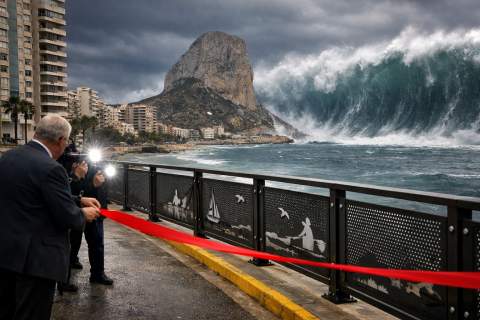
Neighbour. While Calp is coming apart, power cuts the ribbon on a railing.
Or how a small photograph tries to conceal a week far larger than itself.
Neighbour,
a town does not reveal itself only when something large collapses.
Sometimes it reveals itself when, in the middle of the collapse, those in power decide to pose beside something small.
That is what happened in Calp this week.
A government fractured.
A press conference was called to project strength.
At the plenary session, accusations, excuses and pending reports filled the chamber.
Ground-floor premises were blocked from becoming housing because those in charge no longer seem capable of ordering what they themselves have allowed to grow without measure.
And in Empedrola, instead of fixing the problem, they altered the direction of traffic and asked residents for patience.
Then, to close the week,
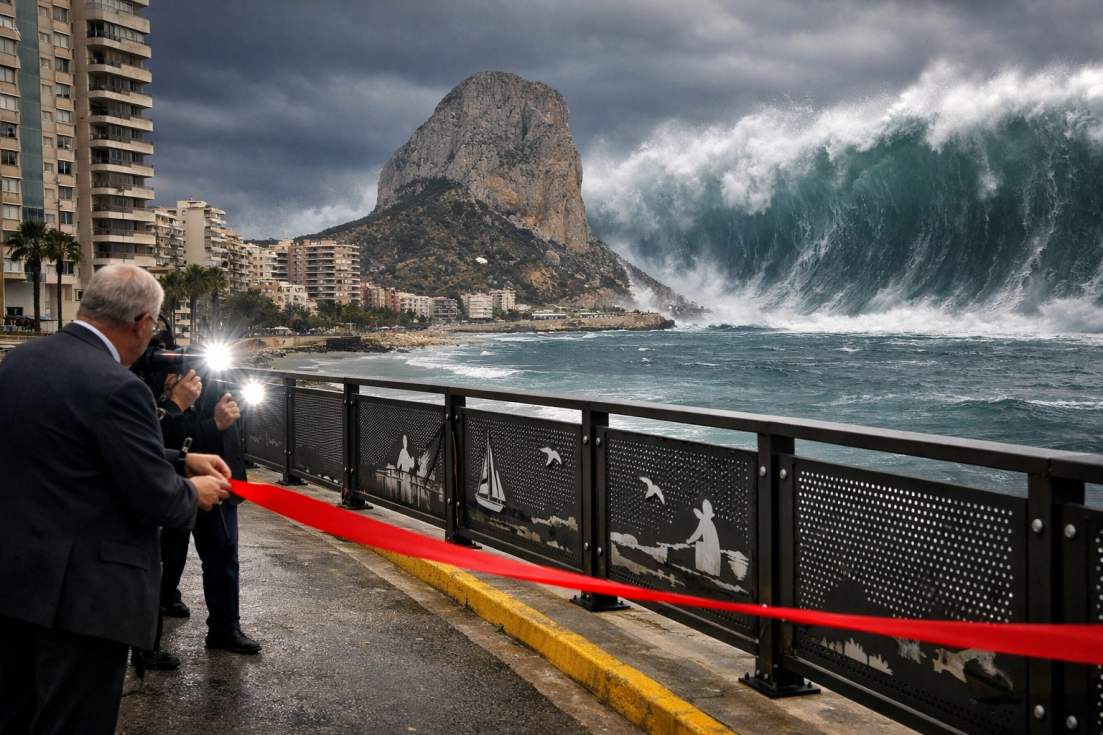
several councillors appeared to inaugurate a railing.
A railing, Neighbour.
And in that moment, everything became clear.
Because when power no longer knows how to deal with the structure, it retreats into the small thing it can still photograph.
Let us be clear.
The problem is not that a railing has been inaugurated.
The problem is that, after a week like this,
that is the image with which power attempts to close the story.
A railing, in itself, is harmless.
What is not harmless is the disproportion.
A political rupture on one side.
Housing pressure on the other.
Pending reports.
Late corrections.
Poorly resolved roads.
Restrictions standing in for planning.
And, in the middle of all that,
an official photograph of something small, visible, tidy and manageable.
That is the real issue.
Not the railing itself,
but the kind of power that, when it can no longer master what truly matters,
clings to whatever it can still present as finished.
Because this week they were not failed by one isolated mistake.
They were failed by the method.
First, a political crisis they could no longer conceal, forcing them to come forward and perform firmness, as though firmness could be improvised behind a microphone.
Then, a plenary session in which the wound did not close but became more visible: reproach, barbed exchanges, justifications, absences turned into ammunition, and the increasingly obvious feeling that the problem was not one councillor but the fraying seam of government itself.
Later came the answer to the issue of ground-floor premises: not to organise the model, not to correct its cause, not to offer a broader solution, but simply to prohibit. To prohibit once again.
And meanwhile, in Empedrola, the same logic prevailed: instead of repairing the road, they changed the direction and asked the resident to adapt to the failure.
That is what this week has exposed.
Not one stumble.
Not one bad afternoon.
Not one unfortunate decision.
It has exposed a style of power that, whenever it arrives too late to what matters, tries to compensate with narrative control, restrictions and small-scale solutions.
There is a very recognisable way in which political impotence reveals itself.
It does not appear in grand speeches.
It appears in the solution chosen.
If an administration does not know what to do about pressure on housing, it bans.
If it does not know how to solve a badly planned road, it diverts.
If it does not know how to preserve the balance of a town it has allowed to grow without restraint, it limits the last person still trying to live normally within it: the neighbour, the small owner, the shopkeeper, the ordinary resident who needs to use the town rather than merely feature in its postcard.
That is what has become so visible this week.
They do not govern from structure.
They govern from reaction.
And every delayed reaction has the same victim:
the citizen asked to provide patience, adaptation, sacrifice or resignation in order to compensate for somebody else’s lack of foresight.
That is why they restrict so readily.
Not because they hold some loftier vision of the town,
but because arriving late almost always means governing worse.
For years, they have been projecting a model of town outward.
Tourism.
Image.
Brand.
Events.
Projection.
A narrative of success.
All of that is promoted, displayed and celebrated.
But when the real cost of that model finally arrives,
it is not borne by those who designed it.
It is not absorbed by the public structure that ought to have anticipated it.
The root is not corrected.
The neighbour pays.
The neighbour who can no longer find decent housing.
The neighbour who watches the ground floor become a battleground.
The neighbour who now has to take the longer route home.
The neighbour living in a town that knows ever better how to attract,
and ever less how to organise itself fairly.
That is the full sequence.
First they drive the pressure.
Then they manage its consequences.
And in the end the same cowardly answer always appears:
the person below must adapt.
While they hold press conferences,
argue,
rectify,
prohibit,
inaugurate
and take the photograph,
the neighbour does something else.
The neighbour endures.
Endures the cost of a town that sells itself well but orders itself badly.
Endures the traffic, the shortage, the uncertainty and the patchwork.
Endures a town that no longer solves the problem for those who live in it, but merely redistributes the burden onto them.
And above all, endures the growing suspicion that it is always the same people who are expected to give way:
those who were already here.
And that, too, wears people down.
It wears down the one who pays.
It wears down the one who waits.
It wears down the one trying to remain.
Most of all, it wears down the one who begins to realise that understanding is always demanded from the same person: the resident.
Neighbour,
in the end, everything comes down to one scene.
A town full of large and unresolved matters.
And a government gathering to photograph a small one.
That would not be serious if everything else had been dealt with.
But it has not.
That is why the railing does not reassure.
It reveals.
It reveals a power that arrives late, corrects halfway, and then displays what it can still close without too much risk.
It reveals a way of governing that manages the symptom while allowing the cause to keep growing.
Above all, it reveals a truth that now weighs too heavily in Calp:
what is visible gets inaugurated,
while what matters gets postponed.
And when a town enters that logic,
the neighbour no longer lives under government.
They begin to live under patchwork rule.
Once read,
it cannot be unread.
AVE CALPINVS.

Francisco Ramón Perona García (@fran_rpg)
Jurist. Citizen. Uncomfortable.

Neighbour,
a town does not reveal itself only when something large collapses.
Sometimes it reveals itself when, in the middle of the collapse, those in power decide to pose beside something small.
That is what happened in Calp this week.
A government fractured.
A press conference was called to project strength.
At the plenary session, accusations, excuses and pending reports filled the chamber.
Ground-floor premises were blocked from becoming housing because those in charge no longer seem capable of ordering what they themselves have allowed to grow without measure.
And in Empedrola, instead of fixing the problem, they altered the direction of traffic and asked residents for patience.
Then, to close the week,
several councillors appeared to inaugurate a railing.
A railing, Neighbour.
And in that moment, everything became clear.
Because when power no longer knows how to deal with the structure, it retreats into the small thing it can still photograph.
Let us be clear.
The problem is not that a railing has been inaugurated.
The problem is that, after a week like this,
that is the image with which power attempts to close the story.
A railing, in itself, is harmless.
What is not harmless is the disproportion.
A political rupture on one side.
Housing pressure on the other.
Pending reports.
Late corrections.
Poorly resolved roads.
Restrictions standing in for planning.
And, in the middle of all that,
an official photograph of something small, visible, tidy and manageable.
That is the real issue.
Not the railing itself,
but the kind of power that, when it can no longer master what truly matters,
clings to whatever it can still present as finished.
Because this week they were not failed by one isolated mistake.
They were failed by the method.
First, a political crisis they could no longer conceal, forcing them to come forward and perform firmness, as though firmness could be improvised behind a microphone.
Then, a plenary session in which the wound did not close but became more visible: reproach, barbed exchanges, justifications, absences turned into ammunition, and the increasingly obvious feeling that the problem was not one councillor but the fraying seam of government itself.
Later came the answer to the issue of ground-floor premises: not to organise the model, not to correct its cause, not to offer a broader solution, but simply to prohibit. To prohibit once again.
And meanwhile, in Empedrola, the same logic prevailed: instead of repairing the road, they changed the direction and asked the resident to adapt to the failure.
That is what this week has exposed.
Not one stumble.
Not one bad afternoon.
Not one unfortunate decision.
It has exposed a style of power that, whenever it arrives too late to what matters, tries to compensate with narrative control, restrictions and small-scale solutions.
There is a very recognisable way in which political impotence reveals itself.
It does not appear in grand speeches.
It appears in the solution chosen.
If an administration does not know what to do about pressure on housing, it bans.
If it does not know how to solve a badly planned road, it diverts.
If it does not know how to preserve the balance of a town it has allowed to grow without restraint, it limits the last person still trying to live normally within it: the neighbour, the small owner, the shopkeeper, the ordinary resident who needs to use the town rather than merely feature in its postcard.
That is what has become so visible this week.
They do not govern from structure.
They govern from reaction.
And every delayed reaction has the same victim:
the citizen asked to provide patience, adaptation, sacrifice or resignation in order to compensate for somebody else’s lack of foresight.
That is why they restrict so readily.
Not because they hold some loftier vision of the town,
but because arriving late almost always means governing worse.
For years, they have been projecting a model of town outward.
Tourism.
Image.
Brand.
Events.
Projection.
A narrative of success.
All of that is promoted, displayed and celebrated.
But when the real cost of that model finally arrives,
it is not borne by those who designed it.
It is not absorbed by the public structure that ought to have anticipated it.
The root is not corrected.
The neighbour pays.
The neighbour who can no longer find decent housing.
The neighbour who watches the ground floor become a battleground.
The neighbour who now has to take the longer route home.
The neighbour living in a town that knows ever better how to attract,
and ever less how to organise itself fairly.
That is the full sequence.
First they drive the pressure.
Then they manage its consequences.
And in the end the same cowardly answer always appears:
the person below must adapt.
While they hold press conferences,
argue,
rectify,
prohibit,
inaugurate
and take the photograph,
the neighbour does something else.
The neighbour endures.
Endures the cost of a town that sells itself well but orders itself badly.
Endures the traffic, the shortage, the uncertainty and the patchwork.
Endures a town that no longer solves the problem for those who live in it, but merely redistributes the burden onto them.
And above all, endures the growing suspicion that it is always the same people who are expected to give way:
those who were already here.
And that, too, wears people down.
It wears down the one who pays.
It wears down the one who waits.
It wears down the one trying to remain.
Most of all, it wears down the one who begins to realise that understanding is always demanded from the same person: the resident.
Neighbour,
in the end, everything comes down to one scene.
A town full of large and unresolved matters.
And a government gathering to photograph a small one.
That would not be serious if everything else had been dealt with.
But it has not.
That is why the railing does not reassure.
It reveals.
It reveals a power that arrives late, corrects halfway, and then displays what it can still close without too much risk.
It reveals a way of governing that manages the symptom while allowing the cause to keep growing.
Above all, it reveals a truth that now weighs too heavily in Calp:
what is visible gets inaugurated,
while what matters gets postponed.
And when a town enters that logic,
the neighbour no longer lives under government.
They begin to live under patchwork rule.
Once read,
it cannot be unread.
AVE CALPINVS.
Francisco Ramón Perona García (@fran_rpg)
Jurist. Citizen. Uncomfortable.




















Normas de participación
Esta es la opinión de los lectores, no la de este medio.
Nos reservamos el derecho a eliminar los comentarios inapropiados.
La participación implica que ha leído y acepta las Normas de Participación y Política de Privacidad
Normas de Participación
Política de privacidad
Por seguridad guardamos tu IP
216.73.216.71